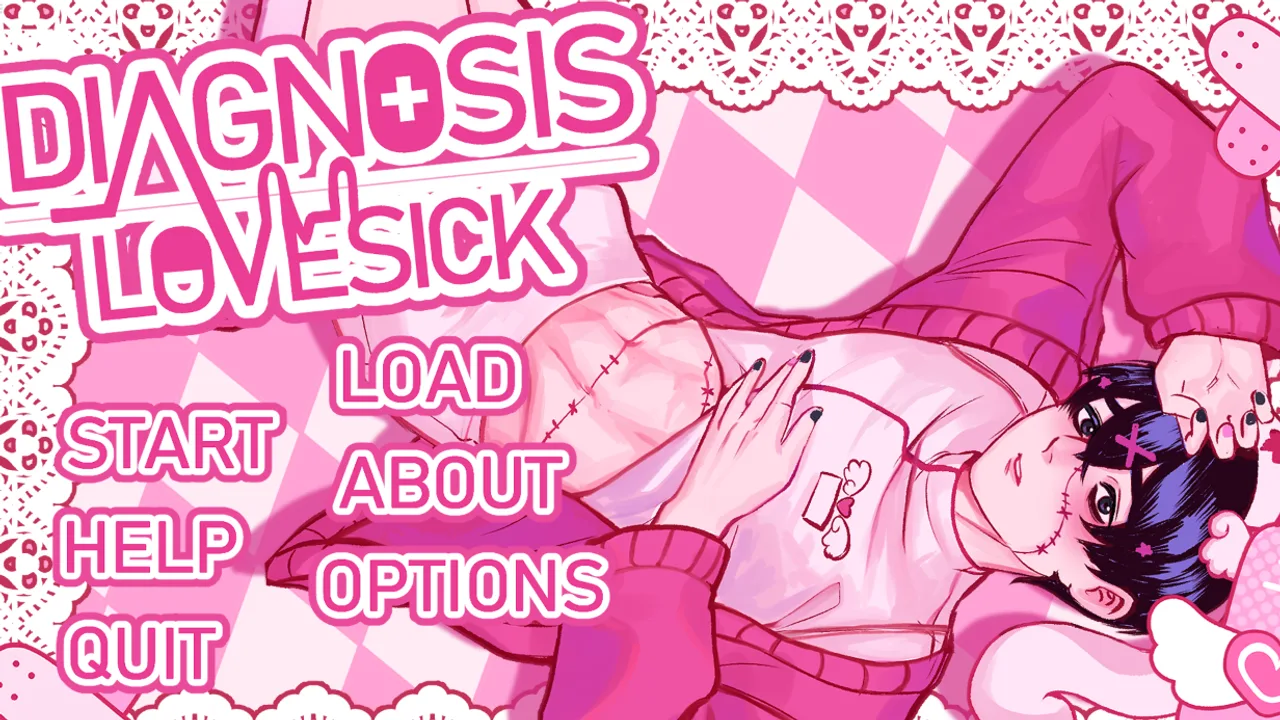

Diagnosis Lovesick
Play Diagnosis Lovesick Online: Psychological Survival & Tactical Mystery Guide
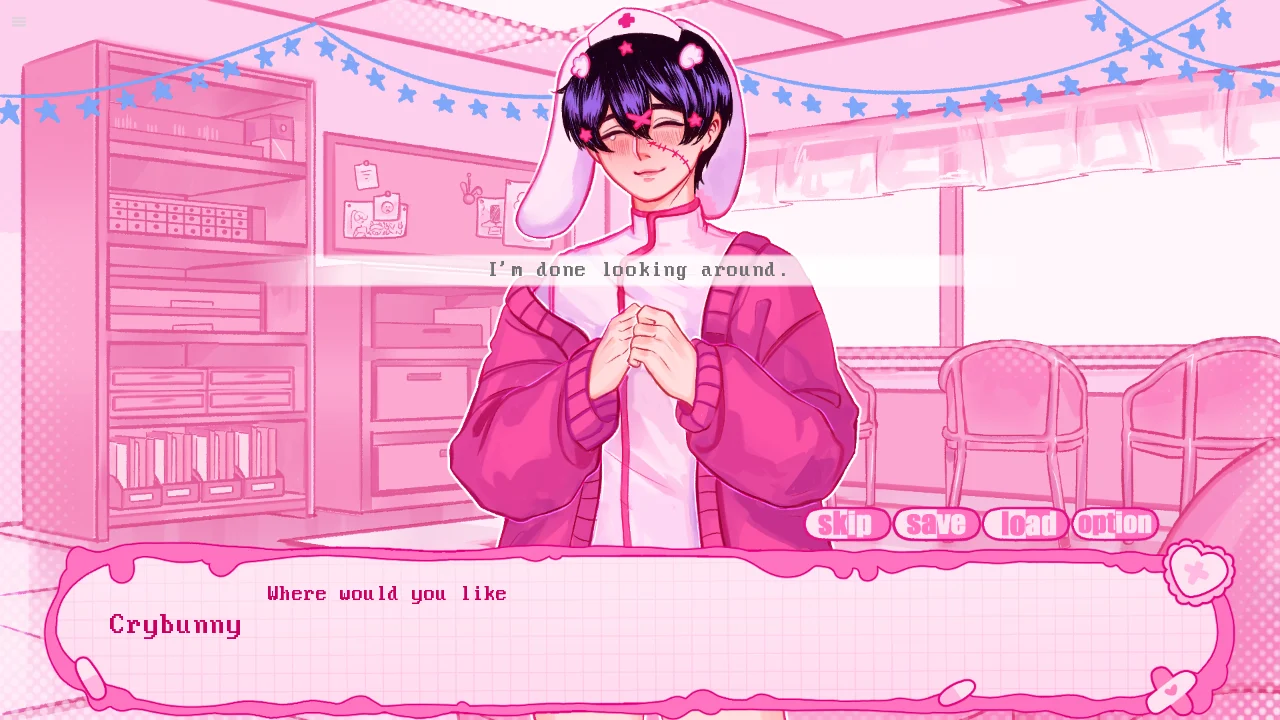
On Martin Fighters, where players usually sharpen their tactical reflexes in high-stakes arcade combat, Diagnosis Lovesick delivers an intense battle of a different kind: a psychological mystery of amnesia, hidden hospital motives, and high-tension decision-making. Developed by indie storyteller and illustrator Ubaepeachy in Ren'Py, Diagnosis Lovesick places you into the locked recovery ward of a mysterious hospital. You have no memory of your name, identity, or diagnosis. Your only caretaker is Nurse Cry Bunny—a soft-spoken, floppy-eared young man who attends to your every medical need, yet becomes evasive the moment you question the ward's locked perimeter or ask what "getting better" actually requires.
While the visual presentation is wrapped in cute bubblegum pinks, stitched plushies, and cozy hospital corridors, keen players will quickly recognize the classic hallmarks of psychological horror. The medical staff is missing, the exterior windows overlook an unmoving void, and fellow inpatients Lucy and Tilly exhibit subtle coping mechanisms hinting at previous trauma. Because Martin Fighters hosts a fully verified, self-contained HTML5 WebAssembly package directly on our servers, you can jump straight into the investigation on your desktop or mobile browser with zero download barriers or external iframe lag.
The Tactical Setup: Intake, Identity & Bedroom Reconnaissance
Approaching Diagnosis Lovesick with a strategic mindset starts in the opening moments before you ever take your first steps through the ward:
1. Intake Protocol & Pronoun Selection: The game opens in pitch-black terminal text where an unseen observer evaluates your cognitive retention. You enter your patient name and determine your self-perception (`A man`, `A woman`, or `Neither`). Choosing your identity parameters sets the dialogue variables for how Cry Bunny and other characters interact with you.
2. The Stitched Dollmaker Minigame: You are given access to a custom rabbit dollmaker equipped with 6 eye sets, 10 stomach patches, 18 headpieces, and 9 neck collars, all modifiable via an interactive RGB color shader. This plushie acts as your personal anchor throughout your stay in the ward.
3. Night 1 Hotspot Reconnaissance: Once Cry Bunny leaves your room and locks the door, you gain free point-and-click control over five critical environmental nodes:
- The Bed: Used to advance time to the morning shift once all room checks are satisfied.
- The Polka-Dot Window: Reveals the strange artificial nature of the outdoor environment.
- The Food Tray: Presents the option to eat Cry Bunny's dinner (hotdog with marshmallows). Consuming the meal unlocks positive morning dialogue and boosts your caregiver relationship.
- The Bunny Doll: Inspects the handwritten note attached to the ear tag and allows re-customization.
- The Locked Ward Door: Verifies that the room is physically barred from the outside, establishing the urgent need for situational awareness.
Complete Control Layout for Keyboard & Mouse Players
Navigating dialogue trees and environmental investigation scenes in Diagnosis Lovesick is responsive and smooth across all standard browser inputs:
- Spacebar / Left Mouse Click: Advances dialogue text. When speed-reading, Spacebar is ideal because it advances narrative lines without accidentally clicking on suddenly appearing dialogue choices.
- Enter Key: Confirms highlighted menu choices, submits text prompts, and interacts with on-screen interface elements.
- Arrow Keys: Cycles through active dialogue choices or menu settings without touching the mouse.
- Page Up / Mouse Wheel Up: Triggers Ren'Py's rollback engine, stepping backward through past dialogue lines so you can review subtle lore clues or rethink a conversational path.
- Page Down / Mouse Wheel Down: Rolls forward through previously inspected dialogue lines.
- Tab / Ctrl Keys: Toggles or holds dialogue skipping, allowing fast replays to test branching consequences.
- H Key: Hides the dialogue box completely so you can inspect character expressions, room layouts, and background art in full 1280×720 resolution.
- Escape Key: Opens the system menu to access multi-slot saves, volume mixers, text speed sliders, and the unlockable CG Gallery.
Ward Surveillance: Mapping the Five Core Hospital Zones
In Chapter 1, Nurse Cry Bunny grants you accompanied clearance to tour the five functional sectors of the hospital. Understanding the tactical purpose of each zone is essential for uncovering the truth behind the ward:
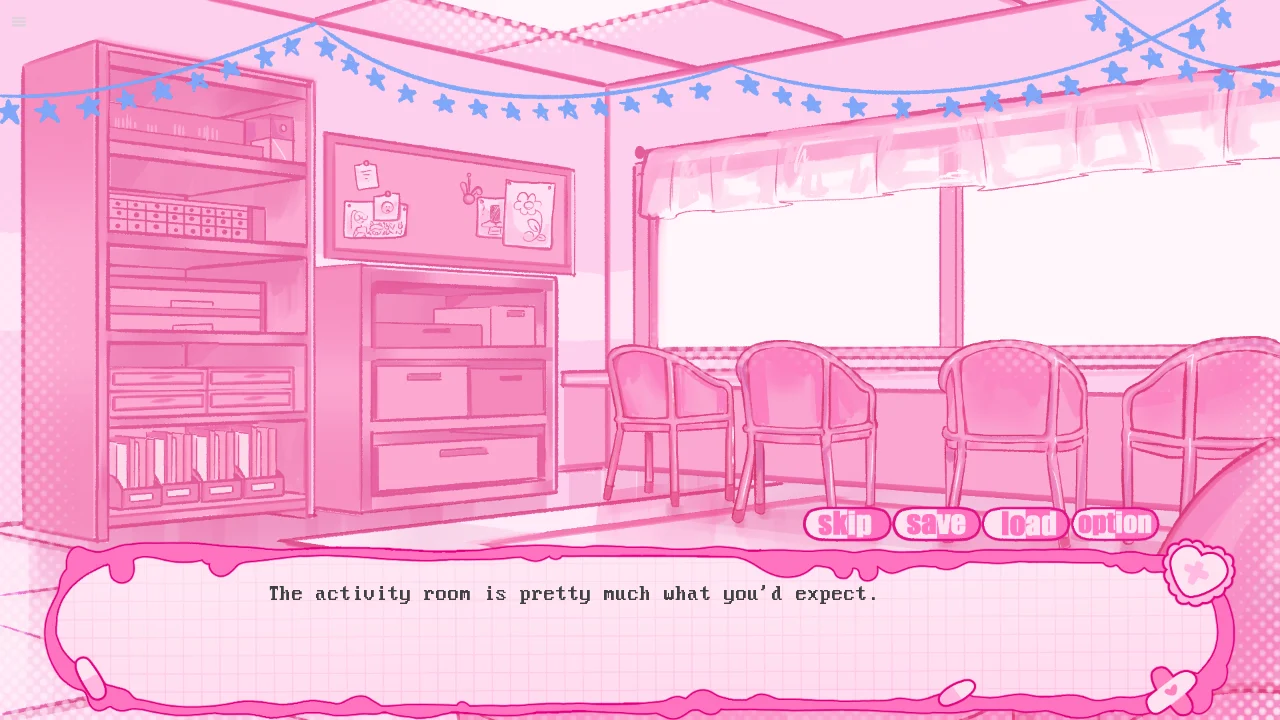
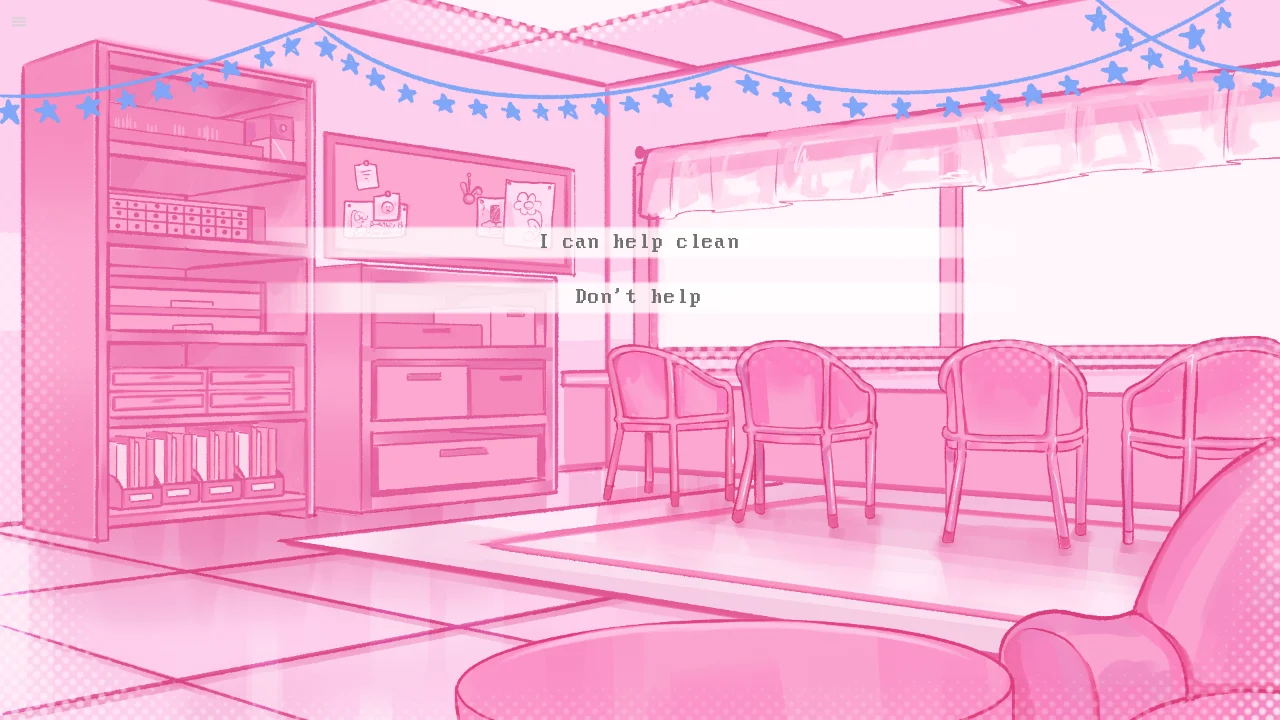
- The Activity Room: Decorated with Lucy's hanging paper stars and stocked with craft supplies and corkboard drawings. This is the primary social hub where you interact with Tilly and Lucy. Choosing to assist with cleaning up spilled pancake mix here directly earns Cry Bunny's trust.
- The Dayroom: A recreational lounge containing full-height bookshelves, a television set, and a sunken cushion pit. Observing the placement of Lucy's blue bunny and Tilly's green bunny plushies highlights the emotional bonds formed by long-term patients.
- The Padded Sensory Room: Designed for emotional de-escalation, this room features quilted pink wall padding, strings of glowing fairy lights, and oversized floor pillows. Opting to rest here triggers a multi-part sleeping CG sequence and uncovers a hidden diary page.
- The Glass Courtyard: An enclosed conservatory crowned by an intricate pink ironwork dome and glass walls. While Tilly maintains the lush greenery around the central water fountain, observing the glass panes provides clear evidence of an artificial, enclosed habitat.
- The Occupational Therapy Kitchen: Outfitted with pegboard tool racks for woodworking and sewing alongside cooking counters. This is where Cry Bunny prepares meals and conducts baking experiments.
Caretaker Psychology & De-escalation Strategies
Surviving the ward requires understanding Nurse Cry Bunny's complex psychological state. Although he genuinely cares for each patient, his authority is strictly bound by the hospital's hidden rules. When pressed for forbidden details, his facial expressions rapidly cycle between confusion, nervous trembling, and defensive silence. Treating him as an ally by participating in shared activities—such as exploring the courtyard fountain or sampling his experimental recipes—keeps dialogue paths open and prevents tension from escalating into hostile lockdown scenarios.
Strategic Routing: Maximizing Trust & Surviving Darker Chapters
While the opening chapter presents itself as a sweet hospital romance, creator Ubaepeachy has structured Diagnosis Lovesick into a six-chapter psychological thriller featuring 3 Good Endings and 2 Bad Endings. To position yourself for optimal outcomes, follow these tactical rules of thumb:
1. Build the Caregiver Trust Buffer: Nurse Cry Bunny experiences severe emotional vulnerability when patients reject his efforts. Always eat the provided hospital meals and offer proactive assistance during kitchen chores to ensure his affection score remains high.
2. Gather Every Scrapbook Fragment: The Polaroid snapshots unlocked in your Gallery serve as chronological records of your progression. Reviewing unlocked photos reveals visual clues that may not be apparent during rapid text playback.
3. Maintain Dedicated Fork Saves: Before making high-impact choices—such as your responses during the sensory room tour or the kitchen discussion—use the in-game save menu (`Escape`) to establish branch checkpoints in your browser's IndexedDB storage.
4. Pay Attention to Character CPS Speeds: The varying text rendering speeds—Lucy's rapid 45 CPS vs Tilly's measured 20 CPS—provide auditory cues indicating stress levels and emotional stability during key exchanges. After unravelling the secrets of the ward, explore more tactical and story-driven titles in our [Arcade Games](/arcade-games) and [New Games](/new-games) sections!